Orbel
Review Process

A consistent process applied to every entry.

The Orbel review methodology was established at the catalogue's founding and has not been simplified. Each entry in the catalogue must pass through five documented stages before publication, and must be re-verified on the quarterly revision cycle.

Five-Stage Review

From ingredient identification to catalogue publication.

01

Ingredient Identification

Each candidate ingredient is identified by its full botanical or chemical name. Common names, brand-specific names, and composite designations are not accepted at this stage. The entry begins with a verified taxonomic or IUPAC identifier.

The preparation form is also established at this stage: whole root, dried extract, standardised extract ratio, or isolated compound. These distinctions affect how an ingredient is cross-referenced against published nutritional research in Stage 3.

Stage Output
  • Full botanical or chemical name confirmed
  • Preparation form documented
  • Common name variants cross-referenced
  • Initial sourcing candidate identified
02

Supplier Assessment

Candidate suppliers are evaluated against a set of documentation requirements. These include: a current certificate of composition for the ingredient, evidence of food-grade processing standards for the handling facility, and a chain-of-custody record for the relevant batch.

Active ingredients are sourced from documented suppliers, with each batch accompanied by a certificate of composition. Sourcing prioritises suppliers whose facilities maintain food-grade processing standards. Suppliers who cannot provide full documentation within a defined period are not listed in the catalogue.

Stage Output
  • Certificate of composition verified
  • Food-grade facility documentation reviewed
  • Chain-of-custody record obtained
  • Supplier classification assigned
03

Research Cross-Referencing

Ingredient profiles are reviewed against published nutritional research. The review focuses on the nutrient role — that is, the function the ingredient plays in normal bodily processes according to recognised nutritional bodies. Role descriptions are drawn from these sources and attributed accordingly.

Ingredient profiles in Orbel supplements are selected based on published nutritional research and undergo independent batch verification for quality and labelling accuracy. Research references used in catalogue entries are archived and available on request.

Stage Output
  • Nutrient role description drafted from published sources
  • Research references archived
  • Role claims reviewed for accuracy
  • Attribution notes added to entry draft
04

Independent Batch Verification

Before an entry is published, the relevant batch must be verified by an independent third party. This verification covers compositional accuracy: whether the labelled ingredient concentration matches the measured concentration, and whether the preparation form matches the description provided by the supplier.

Third-party verification records are archived with a batch code and date. The entry is not published until a current verification record is on file. If a supplier changes batch composition between verification cycles, the entry is suspended until re-verification is complete.

Stage Output
  • Third-party verification record obtained
  • Batch code and date archived
  • Compositional accuracy confirmed
  • Entry cleared for final editorial review
05

Editorial Review and Publication

The completed entry draft is reviewed for language accuracy, attribution completeness, and editorial consistency with existing catalogue entries. Nutrient role descriptions are checked against the source references. Any marketing language, outcome claims, or undocumented assertions are removed at this stage.

Once approved, the entry is assigned a catalogue reference number and published. The publication date and current revision number are visible on the entry. The entry enters the quarterly revision queue immediately upon publication.

Stage Output
  • Entry language reviewed and approved
  • Catalogue reference number assigned
  • Publication date recorded
  • Entry added to revision queue
Quarterly Revision

Every entry is reviewed on a fixed cycle.

The catalogue operates on a four-times-per-year revision cycle. At each revision point, all active entries are checked against current supplier documentation, any newly published nutritional research relevant to the ingredient, and the current independent verification record.

Entries where documentation has lapsed, where a supplier has changed composition without re-verification, or where new research substantially modifies the accepted nutrient role description are updated, flagged, or retired. Retirement notes remain in the archive.

The revision dates for all entries are visible in the catalogue, along with a revision number. Readers can request the change log for any entry from the editorial team at the contact address below.

Q1 Revision January

Annual supplier re-assessment. All certificates of composition updated. Research references reviewed against prior twelve months of published work.

Q2 Revision April

Mid-year batch re-verification for all entries with active independent verification records. Sourcing status flags updated.

Q3 Revision July

Language and attribution review. Entry drafts checked for consistency with updated editorial standards. New candidate ingredients assessed.

Q4 Revision October

Catalogue-wide audit. Retired entries reviewed for possible re-instatement. Annual revision report compiled and archived.

Supplier Standards

What an Orbel-listed supplier is required to provide.

Certificate of Composition

A current certificate from an accredited third-party testing body confirming the ingredient identity, active concentration, and preparation form for the specific batch under assessment.

Required for all entries

Facility Processing Documentation

Evidence that the handling and processing facility operates under documented food-grade standards. This documentation is retained in the Orbel supplier archive and updated at each annual Q1 revision.

Annual renewal

Chain-of-Custody Record

A traceable record from ingredient origin through processing to delivery. For botanical ingredients, this includes the collection or cultivation region. For mineral-derived ingredients, the extraction and refining process is documented.

Per batch
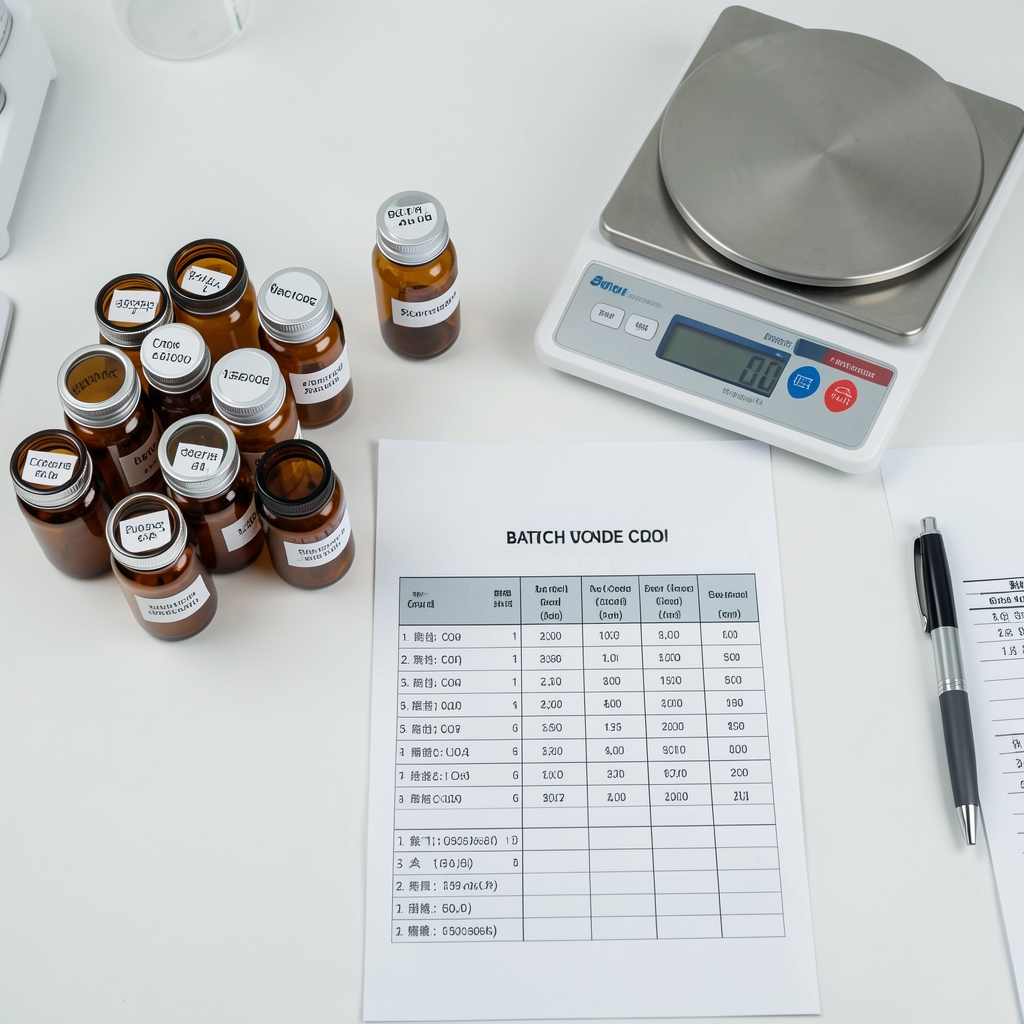
Overhead view of a clean quality-control workspace with labelled amber glass sample containers, batch code log sheets, and a calibrated scale under bright studio lighting
Stage 04

Independent batch verification workstation. Certificate archived under batch code. Revision cycle Q1-2025.

Editorial desk with open research journals, highlighted sourcing documentation, and a printed ingredient cross-reference chart beside a cup of black coffee in natural window light
Stage 03

Research cross-referencing session, Vienna editorial office. References archived and attributed per entry.

5
Review Stages
4
Annual Revisions
3P
Third-Party Verified
100%
Source Documented
Methodology FAQ

Common questions about the review process.

No. Orbel does not accept payment, sponsorship, or any other commercial arrangement in exchange for catalogue inclusion. Entries are added based solely on the documentation review process described on this page. Suppliers are not informed of a pending review in advance.

The standard review timeline is six to ten weeks from initial identification to publication. The largest variable is Stage 2 — supplier documentation requests can take three to four weeks to resolve. Entries that clear supplier assessment quickly tend to move through the remaining stages within two to three weeks.

The entry is flagged with a "verification pending" status until a current third-party record is obtained. The entry remains visible in the catalogue with its flag, so readers are aware the verification is being renewed. If verification cannot be obtained within one full revision cycle, the entry is retired.

Research reference archives are available on request. Send the catalogue reference number and the specific research context you need to [email protected]. The editorial team typically responds within five working days. Change logs for a specific entry revision are available under the same request process.